
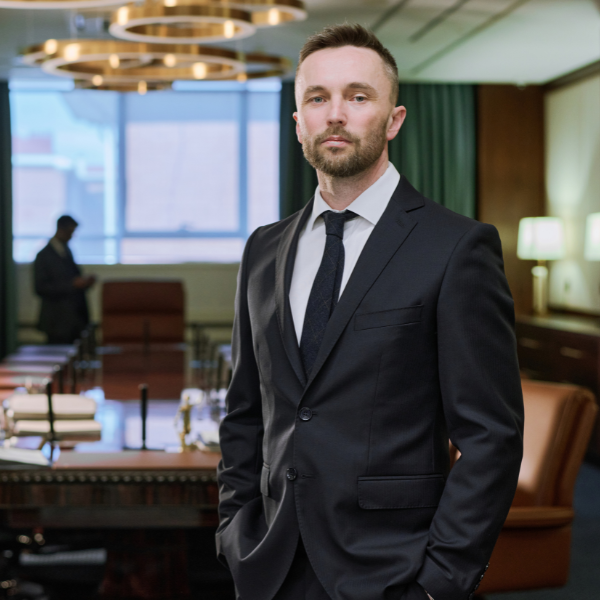
Risk Is Not the Enemy—Unmeasured Exposure Is
Marcus Feldman on institutional discipline, downside protection, and decision-making under uncertainty
By Elite 100 Editorial
“Risk isn’t eliminated at the institutional level. It’s engineered.”
— Marcus Feldman
Elite 100: Marcus, at an institutional level, how do you define risk in today’s financial environment?
Marcus Feldman: Risk is any exposure that hasn’t been deliberately measured, priced, and planned for. Institutions don’t fail because markets move—they fail because assumptions break. True risk management is not about avoiding volatility, but about understanding how systems behave when conditions change.
Elite 100: How does institutional risk management differ from individual or retail risk planning?
Marcus Feldman: Scale changes everything. At the institutional level, small inefficiencies compound quickly. Risk management must be systemic, not reactive. Decisions are evaluated not just on potential returns, but on how they interact with liquidity, leverage, counterparties, and long-term obligations.
“At scale, risk is rarely isolated—it’s interconnected.”
Elite 100: What is the most common mistake institutions make during stable market periods?
Marcus Feldman: Complacency. Stability often leads to relaxed controls and optimistic assumptions. The absence of stress creates the illusion of safety. In reality, strong markets are when risk frameworks should be tested most aggressively.
Elite 100: How do you stress-test systems against unpredictable events?
Marcus Feldman: By assuming unpredictability rather than modeling perfection. Stress testing isn’t about forecasting specific crises; it’s about understanding thresholds—where liquidity tightens, where leverage becomes dangerous, and where operational friction appears.
Elite 100: Volatility has become persistent rather than cyclical. How should institutions adapt?
Marcus Feldman: By designing systems that function under volatility, not in spite of it. That means flexible capital allocation, conservative leverage, and clear escalation protocols. Institutions must be built to absorb shock without requiring emergency decision-making.
“Resilient systems don’t rely on perfect conditions.”
Elite 100: How do you balance opportunity with capital preservation?
Marcus Feldman: By separating conviction from exposure. You can believe strongly in an opportunity without committing disproportionate capital. Risk-adjusted positioning is what allows institutions to remain active across cycles.
Elite 100: What role does governance play in effective risk management?
Marcus Feldman: A decisive one. Risk frameworks fail when accountability is unclear. Strong governance ensures that decisions are documented, reviewed, and challenged. Transparency is as important as analysis.
“Good governance doesn’t slow decisions—it strengthens them.”
Elite 100: How important is human behavior in institutional risk outcomes?
Marcus Feldman: Critical. Models don’t panic—people do. Risk systems must account for behavioral responses under pressure. Clear processes reduce emotional decision-making when stakes are high.
Elite 100: What advice would you give organizations reassessing their risk posture today?
Marcus Feldman: Revisit assumptions made during favorable conditions. Ask what breaks first under stress. Institutions that address weaknesses proactively rarely face existential threats.
Elite 100: Final question—how do you personally define success in risk management?
Marcus Feldman: Success is quiet continuity. When institutions operate smoothly through disruption without dramatic intervention, risk management has done its job.
“The best risk management is invisible—until it’s needed.”
Contact Form