

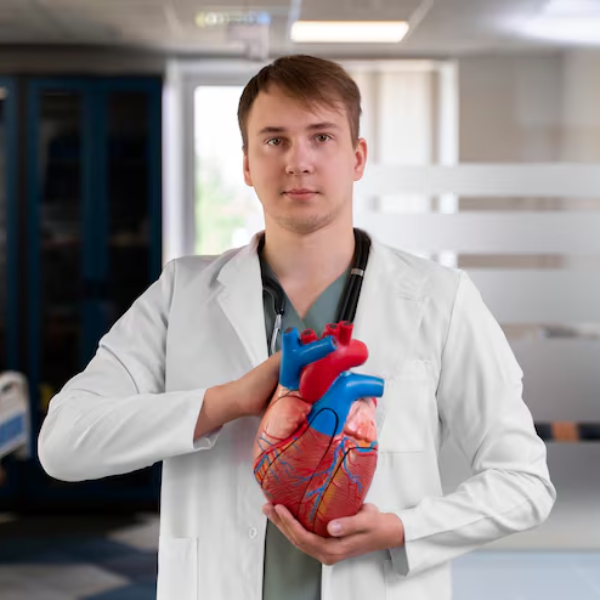
Redefining Heart Health Through Science
Dr. Samuel Whitmore on cardiovascular research, prevention, and translating science into better outcomes
By Elite 100 Editorial
“The future of cardiovascular care lies in understanding risk long before symptoms appear.”
— Dr. Samuel Whitmore
Elite 100: Dr. Samuel, cardiovascular disease remains one of the leading global health challenges. How do you define meaningful progress in this field today?
Dr. Dr. Samuel: Meaningful progress is prevention supported by precision. While treatment has advanced significantly, the real opportunity lies in identifying risk earlier and intervening before irreversible damage occurs. Progress means fewer emergencies, not just better responses to them.
Elite 100: What initially drew you to cardiovascular science?
Dr. Dr. Samuel: Complexity and scale. The cardiovascular system affects nearly every organ, and small changes can have profound effects. I was drawn to the challenge of studying systems where prevention, behavior, and biology intersect.
“Heart health is a systems problem, not a single-disease problem.”
Elite 100: How has cardiovascular research evolved over the past decade?
Dr. Dr. Samuel: It has become more data-driven and personalized. Advances in imaging, genomics, and biomarkers allow us to understand individual risk profiles rather than relying solely on population averages. This shift is changing how we think about both prevention and treatment.
Elite 100: What role does lifestyle research play alongside clinical science?
Dr. Dr. Samuel: A critical one. Lifestyle factors such as nutrition, physical activity, sleep, and stress directly influence cardiovascular outcomes. Scientific breakthroughs are most effective when combined with evidence-based lifestyle interventions.
Elite 100: How do you approach translating complex research into clinical application?
Dr. Dr. Samuel: Through collaboration. Scientists, clinicians, and public health experts must work together to ensure research findings are practical, understandable, and implementable in real-world settings.
“Discovery has value only when it reaches patients.”
Elite 100: What are the biggest barriers to reducing cardiovascular disease at a population level?
Dr. Dr. Samuel: Late intervention and inconsistent access to preventive care. Many individuals enter the healthcare system only after symptoms appear. Shifting toward proactive screening and education is essential.
Elite 100: How does technology support modern cardiovascular research?
Dr. Dr. Samuel: Technology enables scale and precision. Wearables, remote monitoring, and advanced analytics provide continuous data that helps us understand patterns previously invisible in clinical visits alone.
“Continuous insight leads to continuous improvement.”
Elite 100: How do you balance scientific rigor with the urgency of patient needs?
Dr. Dr. Samuel: By maintaining ethical discipline. Urgency must never compromise accuracy or safety. Rigorous science ultimately serves patients better, even if it requires patience.
Elite 100: What advice would you give young scientists entering cardiovascular research?
Dr. Dr. Samuel: Stay curious and collaborative. The most impactful advances happen at the intersection of disciplines. No single field holds all the answers.
Elite 100: Final question—how do you personally define success as a healthcare leader?
Dr. Dr. Samuel: Success is measurable improvement in population health. When fewer people suffer preventable cardiovascular events and more live longer, healthier lives, the science has fulfilled its purpose.
“True success in cardiovascular science is measured in lives extended and emergencies avoided.”
Biography
Tech Innovations Inc.
Renewable Power Corporation
Leading the transition to renewable energy with innovative business models and clean technology investments.
SPECIALIZATION
Renewable Energy Business
ACHIEVEMENTS
Clean Energy Business Leader
Renewable Innovation Award
Contact Form